Advanced Robotics
Ready to level up? Transition from block-based coding to real programming with Python. Design, 3D print, and code your own antweight (150g) battle bot or sumo bot from scratch! This intensive 2-week seasonal camp teaches 3D modeling, electronics, and text-based programming-the skills needed for high school robotics teams and advanced STEM competitions.
Program Overview
2 Weeks
Monday-Friday, full day
Text-Based Code
Python programming
Pro Tools
Arduino, Raspberry Pi, CAD
What Your Child Will Learn
Daily Activities
- • Learn microcontrollers, circuits, and electronics fundamentals
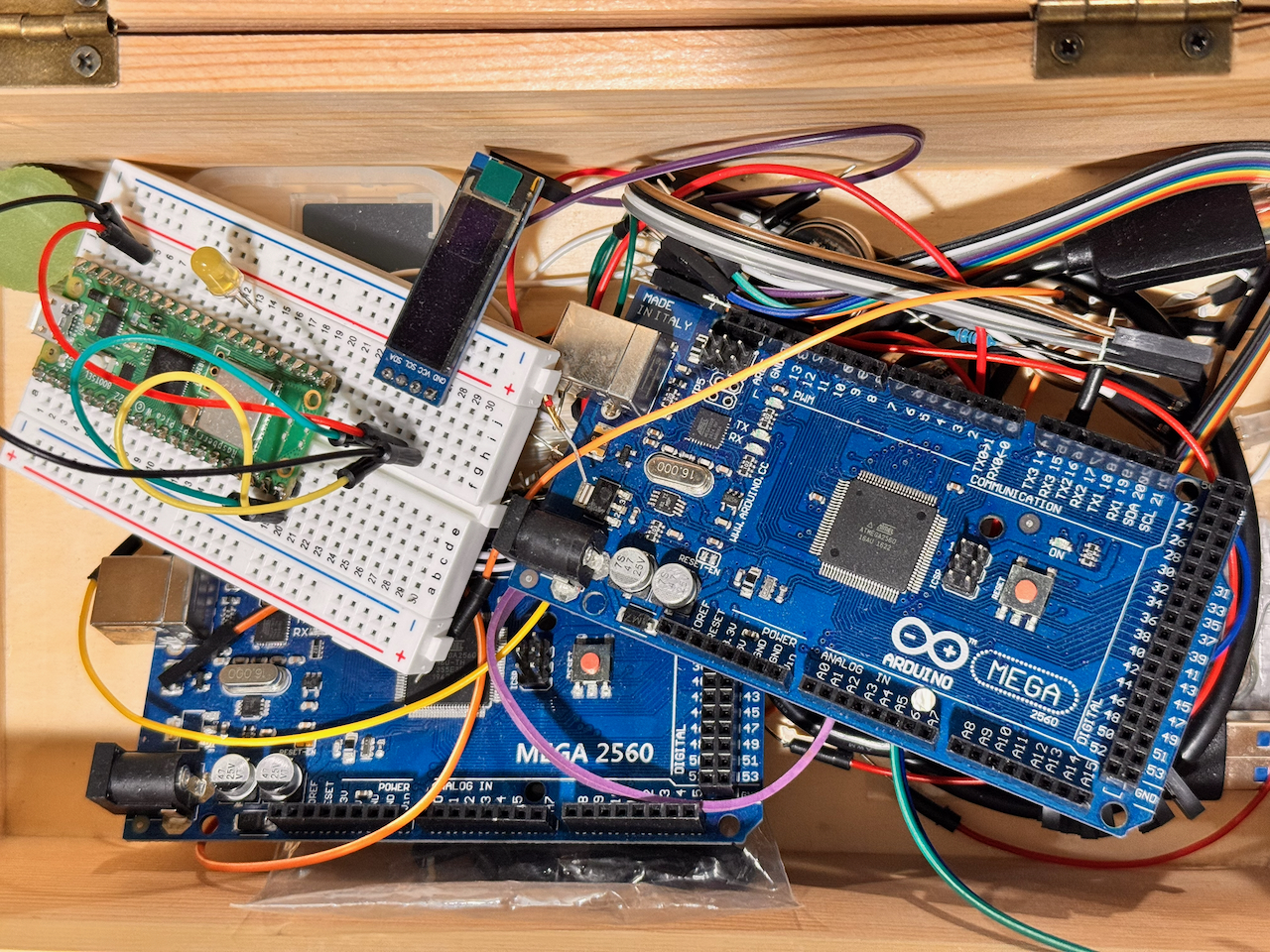
- • Write Python programs for Arduino and Raspberry Pi Pico
- • Study motor types (DC, servo, stepper) and build control circuits
- • Integrate sensors for autonomous robot behavior
- • Program robot movement and navigation
Electronics, Motors & Programming
Students dive into electronics fundamentals and Python programming. They learn about voltage, current, and resistance while building circuits on breadboards. Through hands-on projects, they program microcontrollers using Python to control LEDs, sensors, and motors.
By mid-week, students progress to motor control-learning about DC, servo, and stepper motors, building H-bridge circuits, and programming autonomous robot movement. This week bridges the gap from block-based coding to real text-based programming.
Key Skills Developed
- • Electronics fundamentals and circuit building
- • Python syntax, structure, and debugging
- • Motor types and control strategies
- • Sensor integration and autonomous behavior
3D Design, Assembly & Tournament
Students enter the world of mechanical design using CAD (Computer-Aided Design) software. They design the chassis, armor, and weapon components for their antweight (150g) battle bot or sumo bot, then 3D print their designs. Students learn weight constraints, material properties, and iterative design within the 150g limit.
By mid-week, students assemble their complete bots-integrating electronics, Python code, and 3D-printed parts. The week culminates in a battle bot or sumo bot tournament where students compete head-to-head and present their designs to peers and parents.
Key Skills Developed
- • CAD software proficiency (Tinkercad, Onshape)
- • 3D printing and design for manufacturing
- • System integration and debugging
- • Competition strategy and presentation
Daily Activities
- • Learn CAD software (Tinkercad, Onshape)
- • Design and 3D print bot chassis, armor, and weapons
- • Assemble complete battle bot or sumo bot
- • Test, debug, and optimize within 150g weight limit
- • Compete in tournament and present designs
Prerequisites
This advanced program is designed for students who have:
-
Completed block-based robotics programs - LEGO SPIKE Prime, EV3, or similar experience required
-
Strong programming fundamentals - Understanding of loops, conditionals, variables, and functions
-
Interest in advanced robotics - Desire to join high school robotics teams or pursue competitive STEM programs
-
8th-9th grade students - Program designed for students transitioning to high school
Program Details
Schedule & Format
-
Duration: 2-week seasonal camp
-
Schedule: Monday-Friday, full day
-
Age Range: 8th-9th grade
-
Class Size: Small groups for hands-on instruction
What's Included
- All electronics components and materials
- Arduino and Raspberry Pi Pico boards
- Access to 3D printers and CAD software
- Expert instruction and mentorship
- Students bring: Laptop with WiFi capability
More Details Coming Soon!
We're developing the curriculum and schedule for this advanced program. Check back soon for complete details on dates, registration, and full course outline, or join our mailing list to be notified.